Strong Leadership in Construction is one of the key factors for a successful construction contracting company. This article is the 2nd in our series on “Contractor Success” and what the key factors are in Running a successful construction company.
Strong leadership with a combination of technical expertise and business acumen is one of those key factors. Here are 10 leadership qualities that are important for running a successful construction company.
If you prefer to watch the video of this presentation than scroll to the bottom or click on this link. Strong Leadership in Construction
1) Visionary and Strategic Thinker
A strong leader in the construction industry must be able to envision the big picture of the company’s goals and objectives, and strategically work towards achieving them. They must be able to think strategically and develop a long-term plan for the company’s growth and success, in addition to setting short term goals that are measurable. They should have a clear vision of what they want their company to achieve, both in the short term and the long term.
2) Team Building and Management
A leader in construction must be able to build and manage a strong team of professionals, including architects, engineers, and construction workers. A construction company is only as good as its team. A strong leader must be able to build and maintain a strong team culture, motivate employees, and create an environment where everyone feels valued and supported.
3) Strong Communication Skills
Communication is key in any industry, but particularly in construction where safety and precision are paramount. A leader must be able to communicate clearly with their team, clients, subcontractors, and stakeholders, both verbally and in writing. A strong leader must be able to articulate their ideas and vision and be an active listener.
4) Decision-making Skills
Construction projects often require quick decision-making and problem-solving skills. A leader must be able to make decisions confidently and quickly, while considering all available information and potential risks. A strong leader must be able to weigh the risks and benefits of different options and make informed decisions.
5) Technical Expertise
Strong leadership in construction requires a deep understanding of the technical aspects of the industry, including building codes, safety regulations, and materials science.
6) Organizational Skills
Construction projects can be complex, involving many different stakeholders and moving parts. A leader must be able to organize and manage resources effectively to ensure the project runs smoothly.
7) Accountability
A leader must be accountable for their decisions and actions and be willing to take responsibility for any mistakes or issues that arise.
8) Financial Management Skills
Running a construction company requires a strong understanding of financial management, including budgeting, forecasting, managing cash flow, and cost control. A strong leader must be able to manage budgets, analyze financial data, and make strategic investments in the company’s growth.
9) Attention to Detail
In construction, even small mistakes can have significant consequences. A strong leader must have a keen eye for detail and ensure that all work is done to the highest standard.
10) Adaptability
A leader in construction must be able to adapt to changing circumstances, whether they are related to technology, regulations, or market conditions. Construction projects are often complex and unpredictable, and a strong leader must be able to adapt to changing circumstances and adjust as needed.
Overall, a successful construction company requires a leader who is visionary, communicative, decisive, adaptable, team-oriented, detail-oriented, and financially savvy, with the ability to make effective decisions and manage resources.
Estimating and Budgeting for Contractor Success. This is the first in a series of articles on what makes a successful construction company. Each article will highlight one of the key aspects that go into creating and operating a successful construction company.
Accurate construction estimating and budgeting are crucial for the success of any construction company or construction project. It doesn’t matter what trade the company performs, or whether its new construction, retrofit, service, commercial or residential. Here are 9 reasons why:
#1 – Budget and Financial Planning:
Accurate estimating helps project owners and stakeholders to create realistic budgets for construction projects, and to ensure that there is enough funding to complete the project as planned and prevent budget overruns. Accurate cost estimation is the foundation of the budget planning process. It helps project owners and stakeholders understand the total costs involved in the project, allowing them to allocate resources and plan the project accordingly.
#2 – Resource Management:
Accurate estimates enable efficient resource management. By knowing the costs involved in each stage of the project, project managers can allocate resources such as labor, equipment, and materials more efficiently. With accurate estimating, the right resources can be acquired and scheduled at the right time, and project delays can be avoided.
#3 – Contract Negotiation:
Accurate estimates can help contractors negotiate better contracts with project owners. This is because owners are more likely to accept proposals from contractors who can provide detailed and accurate estimates.
#4 – Risk Management:
Estimating costs accurately helps identify potential risks and uncertainties that may impact the project’s timeline and budget. By identifying these risks in advance, project managers can take proactive measures to mitigate them. Estimating is a key tool for risk management. Accurate estimates help to identify potential risks and ensure that contingency plans are in place to address them. This helps to avoid cost overruns and project delays.
#5 – Client Relationship and Satisfaction:
Accurate estimates lead to realistic expectations. When clients have a clear understanding of the project costs, they are less likely to be disappointed by unexpected costs or delays, leading to higher client satisfaction. Accurate estimating is crucial for maintaining good client relationships. If estimates are consistently inaccurate, clients can lose confidence in the contractor’s ability to manage the project, which can damage the relationship and impact future business opportunities.
#6 – Profitability:
Accurate estimates enable contractors to price their services appropriately, ensuring they make a profit while remaining competitive. When estimates are accurate, contractors are less likely to underestimate costs, leading to losses or inadequate profit margins. Estimating is the foundation of a successful construction company, as without accurate estimates a company will go out of business. A construction company must understand the cost to build a project, and that starts with timely and accurate estimates.
#7 – Project Scheduling:
Accurate estimating helps in scheduling construction projects. It helps to determine the time needed for the completion of each phase of the project and enables stakeholders to plan and monitor the project timeline effectively.
#8 – Bid Selection:
For construction companies, accurate estimating is vital when selecting which projects to bid on. If an estimate is too low, it may result in a loss on the project, and if it is too high, the company may lose the bid.
#9 – 5D BIM:
Estimates are used in 5D Building Information Modeling along with the project schedule. By providing accurate estimates, the construction team can modify the building model and receive instant updates on the construction cost based on the cost data inputted from the estimate.
Summary
Overall, accurate construction estimating is critical for the success of any construction company or project, from the initial planning phase to the final delivery. Accurate construction estimating is essential for successful project completion, profitability, and maintaining positive client relationships. Overall, accurate construction estimating is essential for ensuring that a construction project is completed on time, within budget, and to the required quality standards.
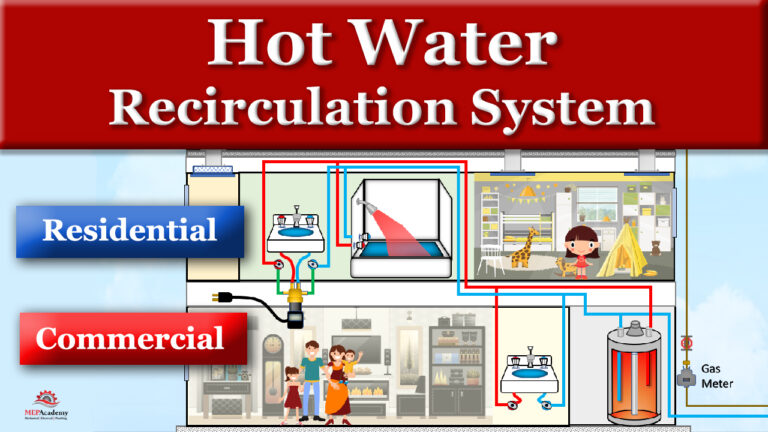
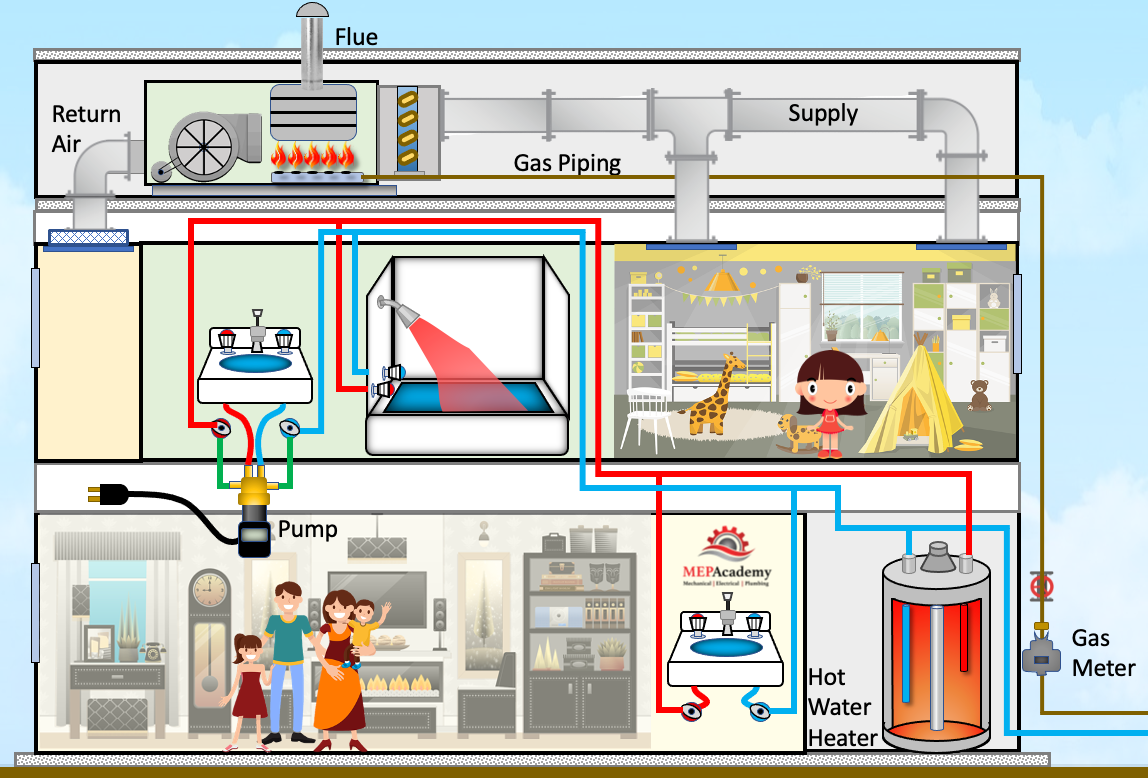
Domestic Hot Water Recirculation System. A lot of water gets wasted waiting for the hot water to arrive at a sink, bathtub, shower or other plumbing fixture. We’ll show you how residential and commercial domestic hot water recirculation systems work to save water, energy, time and money.
We’ll start by showing you three basic residential systems. Domestic hot water recirculation systems are designed to provide instant hot water to various fixtures and appliances throughout a home, such as faucets, showers, and washing machines, by circulating hot water continuously through the pipes, so as to avoid waiting for the water to heat up.
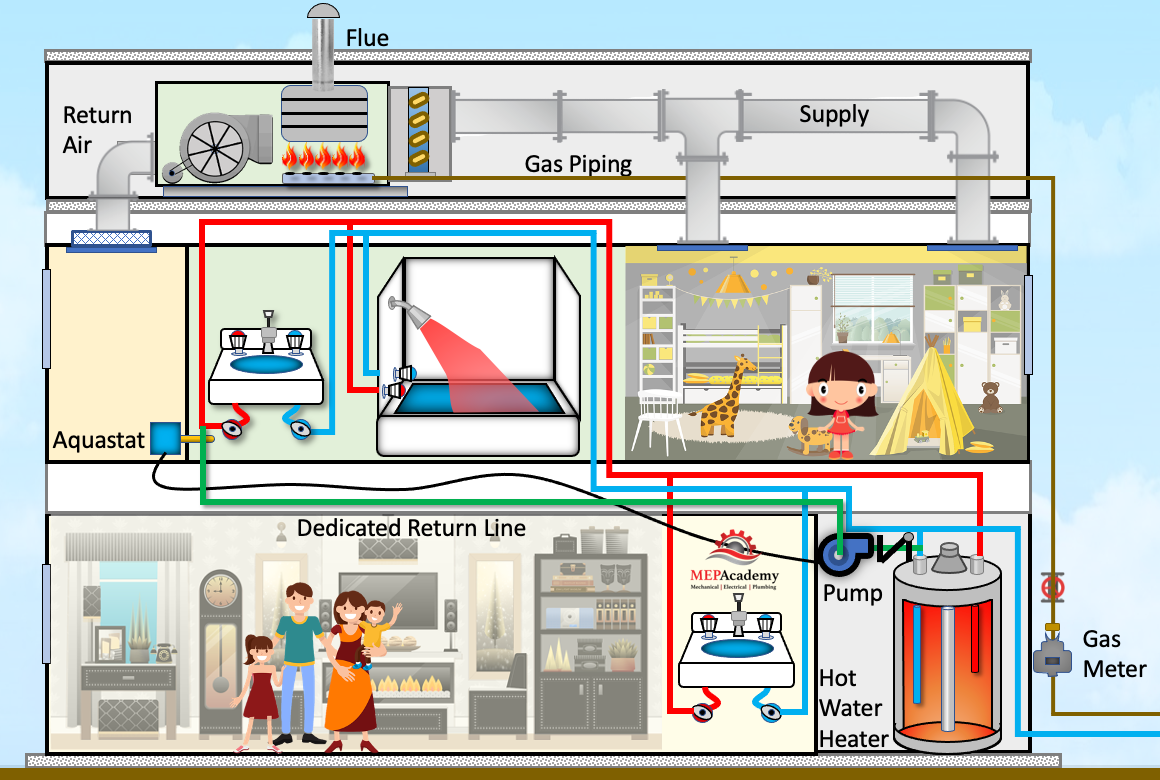
System #1 is the Traditional Residential System with a Dedicated Return Line.
Hot water recirculating system
A dedicated return line is installed that connects the furthest hot water fixture in the home back to the water heater. This line allows hot water to circulate continuously back to the water heater in a continuous loop.
A recirculation pump is installed on the hot water return line, typically near the water heater. The pump is designed to move hot water from the farthest fixture through the dedicated return line back to the water heater.
A check valve is installed on the return line to prevent hot water from flowing back into the return piping.
A timer or thermostat is installed to control when the recirculation pump operates. To ensure that the recirculation system operates efficiently, a temperature sensor or timer is installed near the pump. The sensor or timer controls the pump to circulate hot water only when needed.
When hot water is needed at a fixture, the pump is activated and hot water is quickly circulated through the pipes, providing hot water almost instantaneously.
The return line ensures that hot water is constantly recirculated, so there is always hot water available when needed.
If the home wasn’t pre-piped with a dedicated return line, then the following two options are available to avoid an evasive renovation project.
Under the Sink Residential System #2
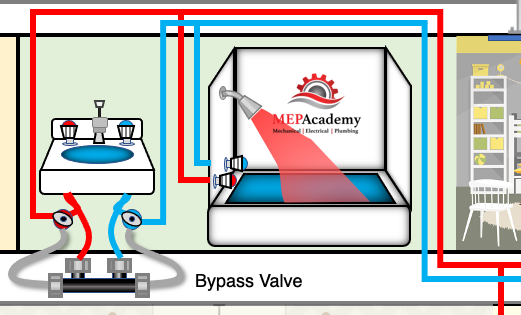
A bypass valve is installed at the furthest fixture to allow the hot water line to circulate back to the water heater using the cold water piping. The Bypass valve stays closed while the hot water temperature is warm.
Hot water recirculation Bypass Valve under furthest fixture
A pump is installed on the hot water line at the water heater. When the temperature of the water at the furthest plumbing fixture cools down the pump will turn on and circulate hot water from the water heater through the bypass valve and into the cold water line until the temperature is warm enough. The pump is turned on by a timer that is set by the user to come on when the residents normally need hot water. The system can be easily installed within a couple of hours.
Under the Sink Residential System #3
Domestic Hot water recirculating pump under sink
There is a simple on demand hot water recirculation system that can be added to the furthest fixture, in our case a pump is added to the sink on the second floor of this home. The piping is reconfigured so that the water is fed through the recirculation pump housing manifold. The manifold is then connected to the sink. There is no hot water recirculation line, instead the pump has a temperature sensor that will shut off the pump when the temperature reaches it setpoint of 110F (43C), or whatever the customer sets it at. A little of the hot water will be sent into the cold water line until the temperature sensor shuts off the pump.
There are options on how to control the pump. By installing an Aquastat or temperature sensor the pump can turn on when the hot water temperature drops to 85F (29C) and keep running until the stat reads 105 F (40 C), at which point it shuts off.
Another option is that there could be a timer set to bring the pump on at a certain time each day, lets say 6:00 am, a half hour before the family gets up. This would allow for the hot water to be ready for use at any fixture.
Another option is a switch that is manually turned on or remotely if using a wireless App. With this option the pump could be set to turn off and on every 15 minutes to maintain hot water at the fixtures.
This avoids wasting time waiting for hot water, saves money and stops wasting water.
Commercial Hot Water Recirculation System
When selecting a commercial hot water recirculation system, it is essential to consider factors such as the building’s size, water usage patterns, and energy efficiency goals.
Domestic hot water recirculation system in a commercial application
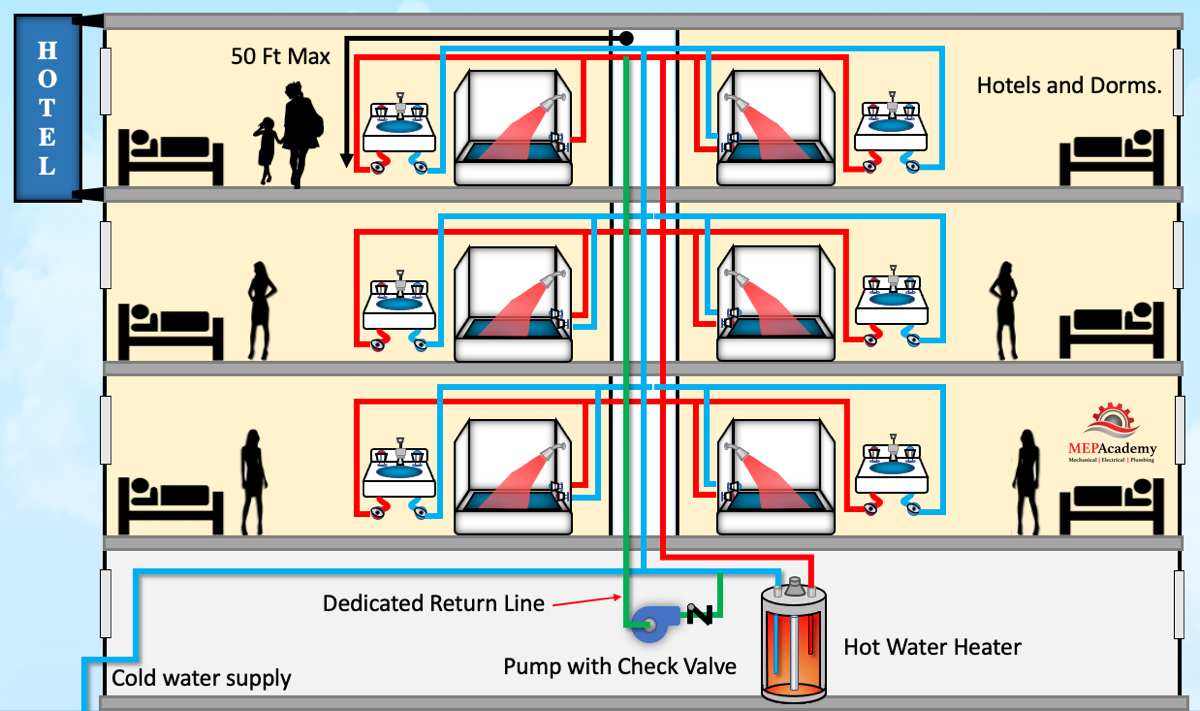
Here is a simple explanation using a small hotel with one main riser.
A hot water recirculation pump will be installed along with a dedicated return line that is connected to the hot water piping at a point that provides a maximum of 50 feet in piping distance to the furthest fixture requiring hot water. The International Plumbing Code IPC, section 607.2 states that the distance from the source of hot water to the fixture shall not exceed 50 feet.
Then a check valve along with the discharge piping is connected to the cold water piping feeding the water heater. This is the basic layout. Of course there are many factors to consider when designing a commercial system so consulting with a qualified mechanical engineer can help ensure that the system selected is appropriate for the building’s specific needs and requirements.
When hot water is turned on at a fixture or appliance, the water in the dedicated return line is pushed back to the water heater. The pump then circulates hot water from the water heater through the dedicated return line, and the hot water is quickly available at the fixture or appliance.
Overall, a domestic hot water recirculation system can save water and energy by reducing the amount of time it takes for hot water to reach fixtures and appliances, and by minimizing the amount of water that is wasted while waiting for hot water to arrive.
Some recirculation systems use a thermostatic valve at each fixture, which automatically turns on the pump when the water temperature drops below a certain level. This can save energy by reducing the amount of time the pump needs to run.
Overall, a domestic hot water recirculation system can provide convenience and save water by reducing the amount of time it takes to get hot water at a faucet or shower.
Various Recirculation System Types
There are various types of commercial hot water recirculation systems available in the market, including:
Pump-based systems: In this type of system, a pump is installed in the hot water line, which circulates hot water continuously through the pipe. A return line is also installed, which sends the cold water back to the water heater.
Demand recirculating systems: In this type of system, a pump is activated only when there is demand for hot water at a specific faucet or fixture. This system typically uses a thermostatic valve to regulate the water temperature and a timer to control the pump.
Gravity-fed recirculating systems: This system uses the natural convection of hot water to circulate it throughout the building. The system is designed so that the hot water rises to the upper floors of the building and then circulates back down through the return line.
Commercial hot water recirculation systems can save significant amounts of water and energy by reducing the time it takes for hot water to reach the tap. They are commonly used in hotels, hospitals, schools, and other commercial buildings where hot water demand is high.
Benefits of Hot Water Recirculation Systems
There are several benefits to using a hot water recirculation system in a commercial or residential building, including:
Improved energy efficiency: With a hot water recirculation system, hot water is constantly flowing through the pipes, reducing the amount of time it takes for hot water to reach its destination. This can result in significant energy savings, as less energy is required to heat the water.
Increased convenience: With a recirculation system in place, hot water is always available when needed, which can be a significant convenience for businesses that rely on hot water for their operations.
Reduced water waste: By reducing the amount of time it takes for hot water to reach its destination, a recirculation system can also reduce water waste, as less water is wasted while waiting for hot water to arrive.
Improved hygiene: With hot water readily available at any tap or fixture, businesses can ensure that their employees and customers have access to hot water for hand washing and other hygiene-related activities.
Domestic hot water recirculation systems work by continuously circulating hot water from the water heater through a dedicated loop of pipes to the fixtures that require hot water, such as faucets and showers. This helps to reduce the amount of time it takes for hot water to reach these fixtures, which can help conserve water and energy.
Overall, hot water recirculation systems can provide a convenient and efficient way to deliver hot water to fixtures, while also reducing water waste and improving energy efficiency.
There are several types of hot water recirculation systems available for commercial use, including traditional and demand-controlled systems. Traditional systems continuously circulate hot water through the pipes, while demand-controlled systems only operate when hot water is needed. The choice of system will depend on the specific needs and requirements of the business in question.
ASHRAE 90.1-2022
7.4.4.2 Temperature Maintenance Controls
Systems designed to maintain usage temperatures in hot-water pipes, such as recirculating hot-water systems or heat trace, shall be equipped with automatic time switches or other controls that can be set to switch off the usage temperature maintenance system during extended periods when hot water is not required.
7.4.4.3 Outlet Temperature Controls
Temperature controlling means shall be provided to limit the maximum temperature of water delivered from lavatory faucets in public facility restrooms to 110°F.
7.4.4.4 Circulating Pump Controls
When used to maintain storage tank water temperature, recirculating pumps shall be equipped with controls limiting operation to a period from the start of the heating cycle to a maximum of five minutes after the end of the heating cycle.
Timer Control
The pump is turned on and off according to a programmed schedule.
If schedule is set to have the pump off when hot water is requested, then water will be wasted.
Temperature Control
With the use of a temperature-controlled system, the pump will turn on and off to maintain the temperature setpoint on the return water piping, usually 120F.
This method keeps a minimum return temperature.
Temperature Modulation Control
This is a mixture of temperature control and scheduled control. The temperature of the domestic hot water supply is changed throughout the day based on the occupancy usage patterns. This could be high demand in the early morning for multifamily residential buildings where occupants are waking up and preparing for their daily activities or going to work. This method attempts to match occupancy behavior to a schedule for setting hot water supply temperatures.
Demand Control
Hot water demand for this method of control uses real-time user input and return water temperature. The pump will run if the controls detect water flow, and the temperature of the return water has dropped to a certain minimum setpoint such as 100F.
Demand control and temperature modulation work the best when combined into one system approach for energy and water savings
Summary
Hot water recirculation systems are typically installed to improve energy efficiency, reduce water waste, and enhance user convenience. By circulating hot water through the building’s supply lines, these systems can minimize the amount of water that goes to waste while waiting for hot water to arrive at the faucet or showerhead.
When designing a domestic hot water system use a compact layout where the distribution to any fixture requiring hot water is a short distance from the source. Install a recirculation pipe with short branches to each fixture requiring hot water.
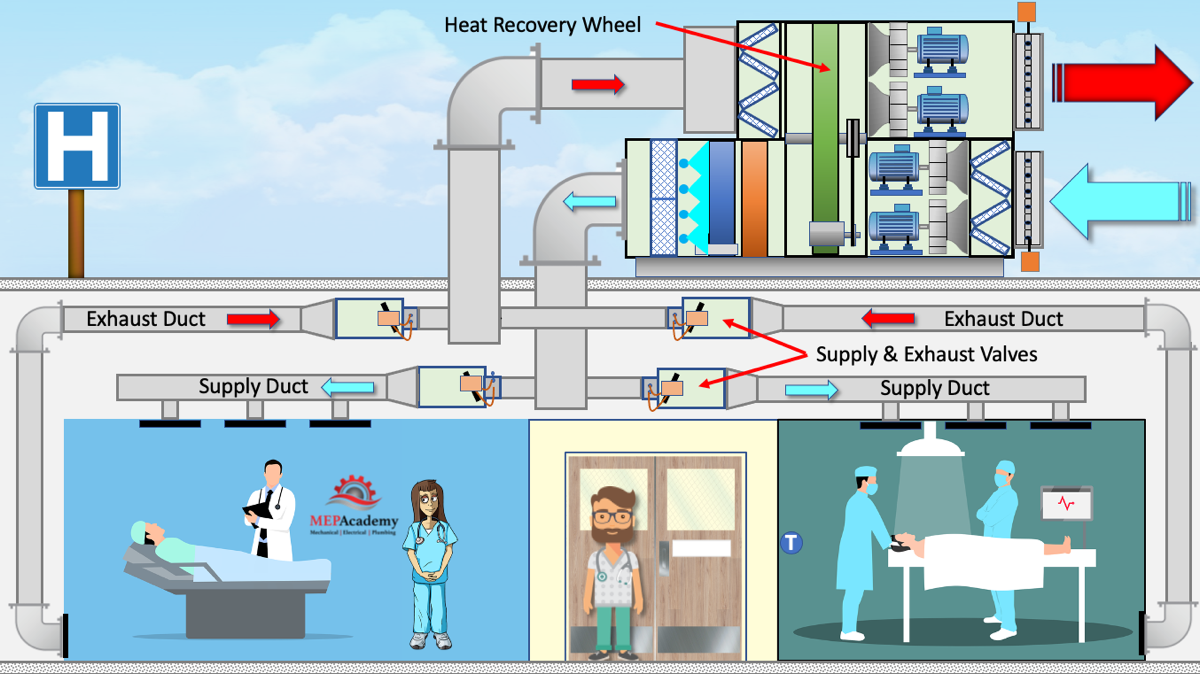
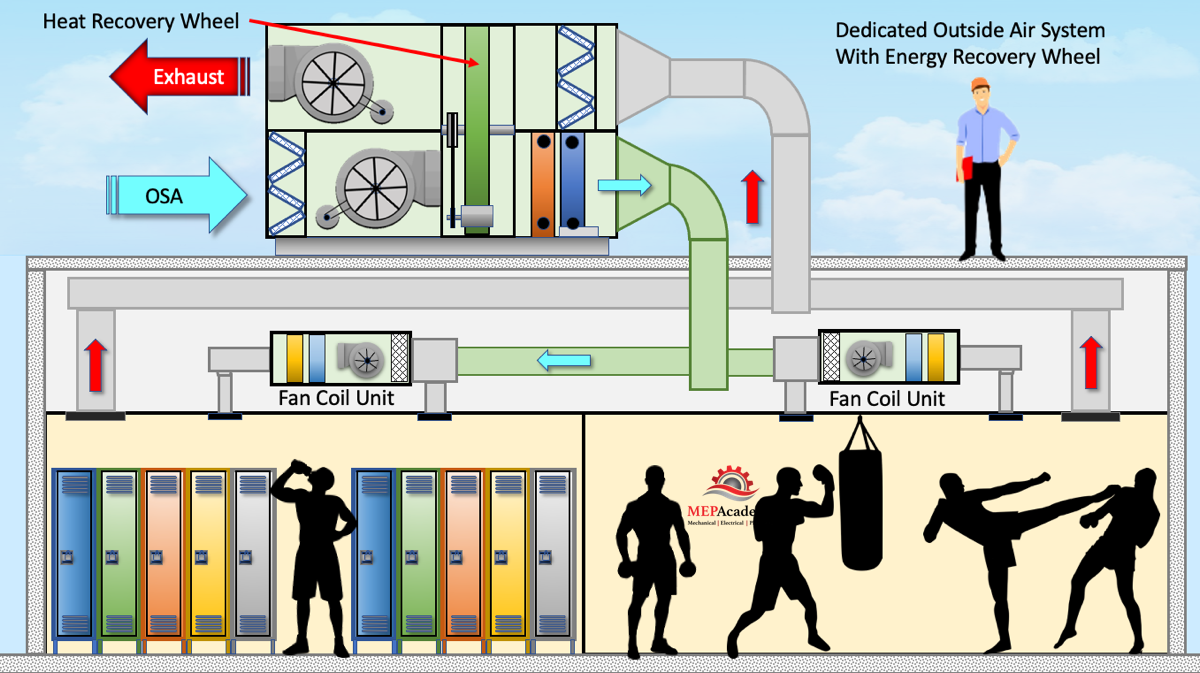
How Heat Recovery Wheels Work. Heat recovery wheels, also known as heat wheels or rotary heat exchangers, are a type of energy recovery device that are commonly used in HVAC (Heating, Ventilation, and Air Conditioning) systems to recover and reuse the heat energy that would otherwise be lost to the environment. Heat recovery wheels are designed to work by transferring heat between two air streams that are flowing in opposite directions, without mixing the two air streams together. We’ll show you how they’re used in a hospital and a locker room at your local gym.
If you prefer to watch the video of this presentation, then scroll to the bottom or click oaths link. How Heat Recovery Wheels Work.
Heat Recovery Wheel serving a Hospital operating Room
Here’s how Heat Recovery Wheels work.
Heat recovery wheels are typically installed in the supply and exhaust air ducts of an HVAC system. The supply air duct carries fresh air into the building, while the exhaust air duct carries stale air out of the building.
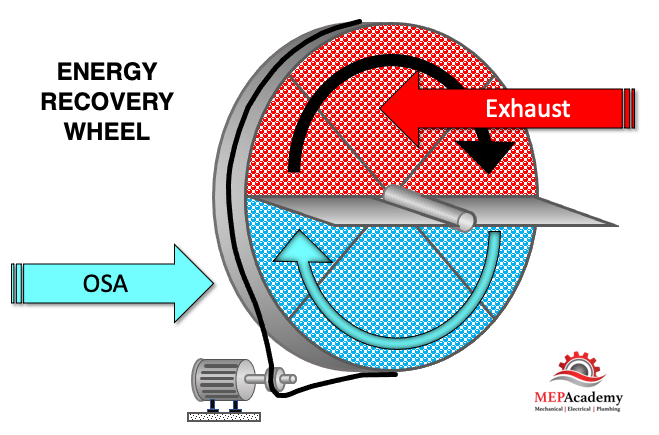
As the two air streams flow past each other, the heat recovery wheel rotates to transfer heat energy from the warm, stale air to the cool, fresh air. This transfer of heat energy occurs using a heat-absorbing material that is typically made of aluminum or a similar metal for sensible wheels and a moisture absorbing material like silica gel or a zeolite molecular sieve for an Enthalpy recovery Wheel.
The heat recovery wheel works by capturing the heat energy from the outgoing air stream as it passes through the heat-absorbing material. The wheel then rotates and transfers this heat energy to the incoming air stream as it passes through the same material in the opposite direction.
As a result, the fresh air entering the building is pre-heated, while the exhaust air leaving the building is cooled. This helps to reduce the overall energy consumption of the HVAC system, as less energy is required to heat or cool the incoming air.
Heat recovery wheels are most effective in climates where there is a large temperature difference between the indoor and outdoor air. In colder climates, the wheels can help to reduce heating costs by pre-heating the fresh air, while in warmer climates, they can help to reduce cooling costs by pre-cooling the fresh air.
Energy recovery wheels can be a separate piece of equipment or come pre-installed in an air handler.
It is important to note that proper maintenance and cleaning of the heat recovery wheel is essential for optimal performance and energy savings. Dirty or clogged wheels can reduce the effectiveness of the system and lead to increased energy consumption.
There are several types of Heat Recovery Wheels. One type will capture sensible heat only and the other is an enthalpy wheel, often referred to as a desiccant wheel, which will capture sensible and latent heat.
Heat Recovery Wheel in Air Handler serving a locker room
Sensible Heat Wheel
With the use of a sensible heat recovery wheel the dry bulb temperature of the air will be increased or decreased depending on the outdoor temperature and setpoint. There will be no effect upon the moisture content or latent heat of the air, as no moisture is transferred between the two air streams.
Energy Recovery Wheel
Enthalpy Wheel
With the use of an enthalpy wheel or total energy wheel, the moisture content or latent heat of the air will be affected. Both sensible and latent heat will be transferred using an enthalpy wheel. The amount of moisture transferred is dependent on the amount of water vapor in the air. Moisture is transferred between the two airstreams using a desiccant which absorbs or adsorbs water vapor from the high-pressure vapor airstream and releases it into the lower pressure vapor airstream.
Capacity Control of Heat Recovery Wheels
When the load of the system varies the wheel can adjust its speed using a variable frequency drive (VFD), or a bypass duct can be installed around the wheel to reduce the volume of air that travels through the heat recovery wheel.
Heat Recovery Wheel Effectiveness
The effectiveness of the heat recovery wheel is determined by how much of the energy is transferred between the two airstreams. This is affected by the amount of air flow and the difference in energy between the two airstreams. The calculation looks like this.
Equation for Effectiveness. E = [Vs x (T1 – T2)] / [Vmin x (T1 – T3)]
E = Effectiveness
T1 = Outside Air Temperature (°F DB) or Enthalpy (btu/Lb.)
T2 = Supply Air Temperature (°F DB) or Enthalpy (btu/Lb.)
T3 = Return Air Temperature (°F DB) or Enthalpy (btu/Lb.)
Vs = Volume of Supply or Outside Air (CFM)
Vmin = Volume Minimum. Lowest CFM, either Supply or Outside Air (CFM)
Using the standard equation for heat transfer, we can modify it to include our effectiveness factor to determine the total heat transferred by the heat recovery wheel.
Sensible Heat Transfer Equation
Standard Equation. Qs = CFM x 1.08 x Delta-T (T1 – T3)
Modified Equation. Qs = E x CFM x 1.08 x Delta-T (T1 – T3)
Total Heat Transfer Equation
Standard Equation. QT = CFM x 4.5 x Delta-Enthalpy (h1 – h3)
Modified Equation. QT = E x CFM x 4.5 x Delta-Enthalpy (h1 – h3)
E = Effectiveness (Sensible or Total)
Qs = Sensible Heat Transferred (btu/hr.)
QT = Total Heat Transferred (btu/hr.)
h1 = Outside Air Enthalpy (btu/Lb.)
h3 = Return Air Enthalpy (btu/Lb.)
The Heating Season for Heat Recovery
When heating is required and the temperatures outside are very cold, the use of a heat or energy recovery wheel can save energy by removing heat from the exhausted airstream. No matter what the season an energy recovery wheel can retrieve needed heat or expel unwanted heat from the airstreams.
ASHRAE 62.1 Air Classifications
Air is classified according to ASHRAE 62.1. The classification indicates whether the air can be recirculated within the same space or transferred to another space based on the classification of that space.
In the above image we show an air handler providing 100% outside air to a locker room and gym. The air handler has a heat recovery wheel to capture energy that would otherwise be wasted. The locker room in our example is considered Class 2 air and can be recirculated within the same space or other Class 2 spaces which includes the GYM portion of the building. Air is classified according to ASHRAE 62.1. The classification indicates whether the air can be recirculated within the same space or transferred to another space based on the classification of that space.
Another method is to remove the fan coils and just feed the space with the Air Handler which has a chilled water and heating hot water coil.