


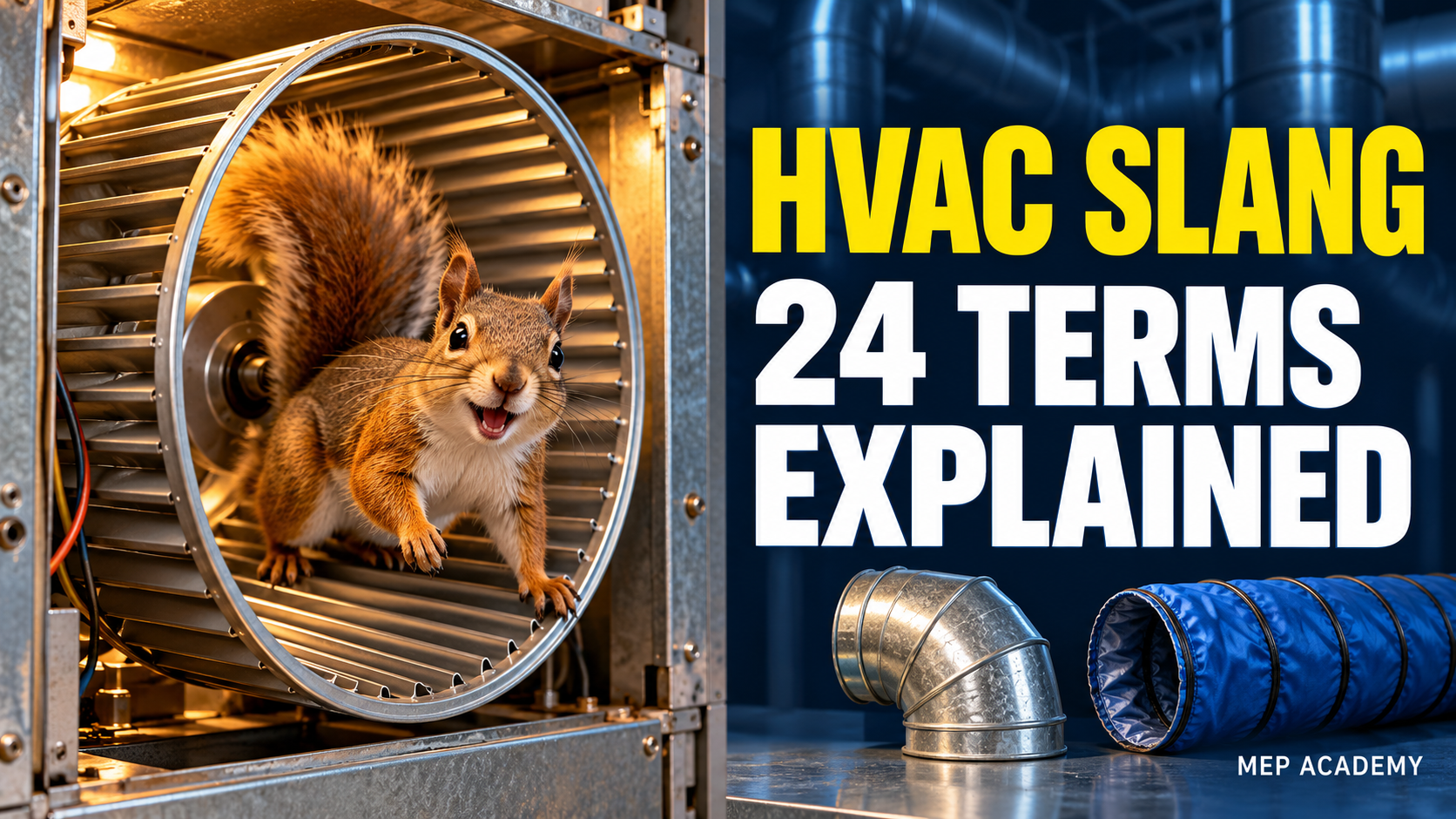
HVAC technicians sometimes sound like they’re speaking another language. They talk about starving coils, hunting valves, squirrel cages, and ghost flow. These HVAC terms describe real equipment and operating conditions, but their meanings aren’t always obvious to beginners.
This guide explains 24 common HVAC slang expressions and technical terms in plain English. Whether you’re an apprentice, building owner, estimator, or someone starting an HVAC career, these short definitions will help you follow the conversation.
Watch the video below for funny visual interpretations followed by the actual HVAC meanings.
1. What Is a Squirrel Cage in HVAC?
A squirrel cage is the nickname for a cylindrical centrifugal blower wheel. Its closely spaced blades resemble an animal’s exercise wheel.
Driven by a motor, the blower moves air through a furnace, air handler, or duct system. Dirt buildup on the wheel can reduce its performance.
2. What Are Duct Socks?

Duct socks, also called fabric ducts or air socks, distribute conditioned air through fabric surfaces or engineered openings.
These lightweight alternatives to metal air-distribution ducts are often suspended from ceilings in gyms, warehouses, and other large spaces.
3. What Is Pookie in HVAC?
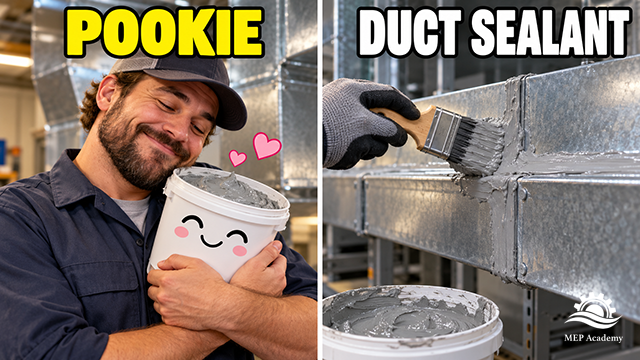
Pookie is slang for duct mastic, a sealant applied to duct joints and seams to reduce air leakage.
Technicians brush or spread it over properly prepared connections. Suitable products and application methods depend on the duct material and installation requirements.
4. What Is a Duct Boot?
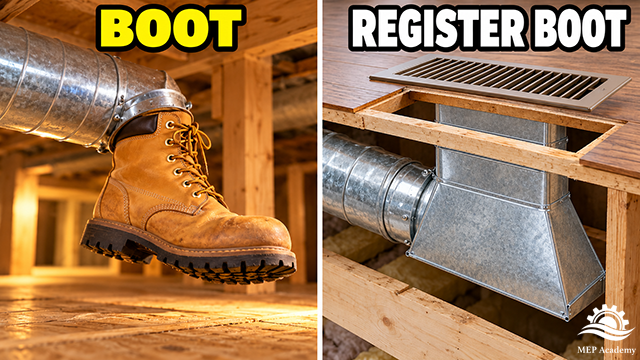
A duct boot, or register boot, connects a duct run to a register opening in a floor, wall, or ceiling.
The fitting transitions between the duct and the shape of the air outlet. A register installed over the opening delivers air into the room.
5. What Is an HVAC Elbow?
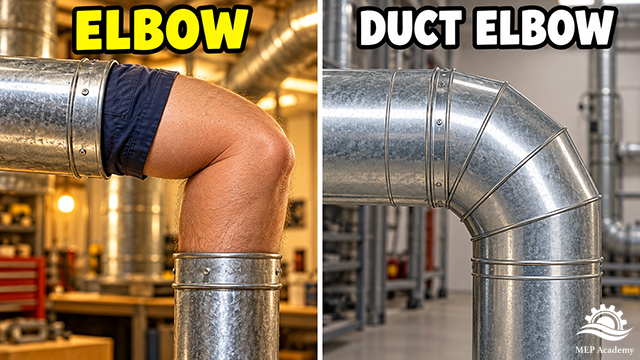
An elbow is a duct or pipe fitting that changes the direction of airflow or fluid flow.
Common examples include 45-degree and 90-degree elbows. Their shape and construction affect resistance, pressure loss, and sometimes noise.
6. What Is a Gooseneck Vent?
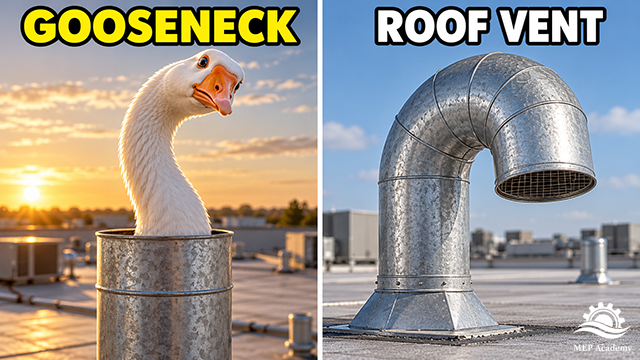
A gooseneck is a curved duct or pipe arrangement named for its resemblance to a goose’s neck.
A rooftop gooseneck vent commonly turns its opening downward to help limit rain entry. Its size, clearance, and screening depend on the application.
7. What Are Trunk and Branch Ducts?
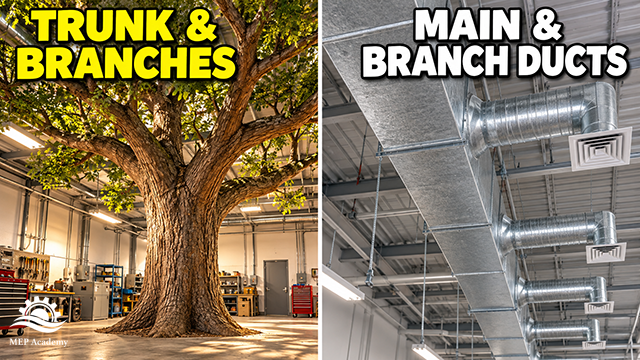
A trunk duct is a main duct that carries air through a distribution system. Branch ducts connect to the trunk and serve individual rooms or areas.
The names resemble a tree: one large trunk divides into smaller branches. Proper sizing helps deliver the intended airflow throughout the building.
8. What Is a Duct Takeoff?
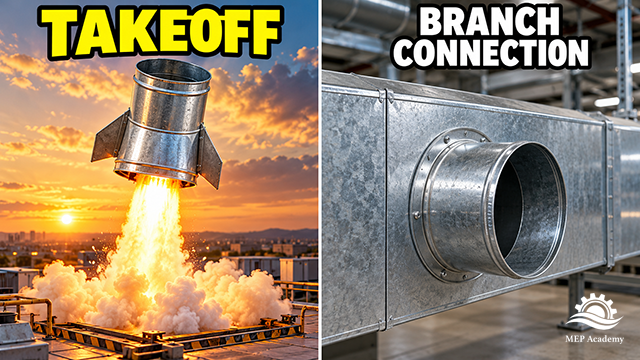
A duct takeoff is a fitting that connects a branch duct to a larger main duct or plenum.
It provides a path for part of the airflow to enter the branch. Takeoff design affects how easily air enters that connection.
9. What Is a Pancake Unit?
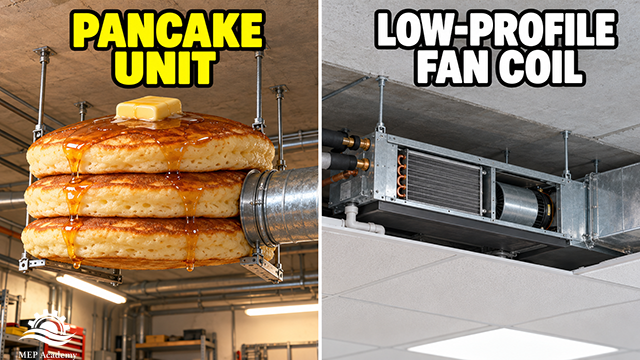
A pancake unit is an informal name for a shallow horizontal fan coil or similar air-handling unit.
Its low profile allows installation above ceilings where vertical space is limited. The nickname varies by region and manufacturer, so confirm which equipment is being discussed.
10. What Is a Swamp Cooler?
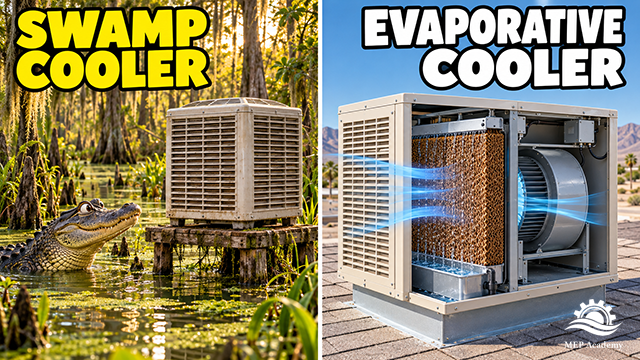
A swamp cooler is a common name for a direct evaporative cooler. It draws outdoor air through wet media, lowering the air temperature as water evaporates.
Evaporative cooling adds moisture to the air and works best in dry climates. It becomes less effective as outdoor humidity increases.
11. What Is a Scroll Compressor?
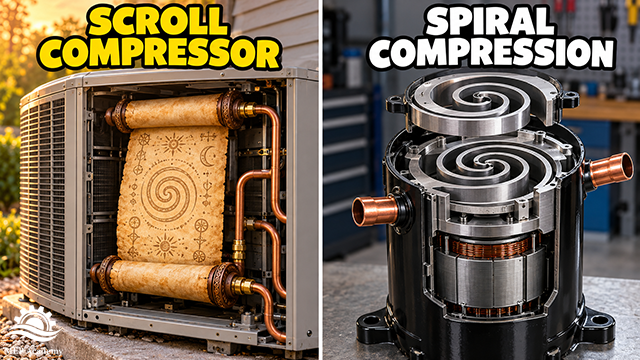
A scroll compressor compresses refrigerant vapor using two intermeshing spiral-shaped elements.
One scroll remains stationary while the other orbits. Refrigerant becomes trapped in progressively smaller pockets, increasing its pressure before discharge.
12. What Does Hunting Mean in HVAC?
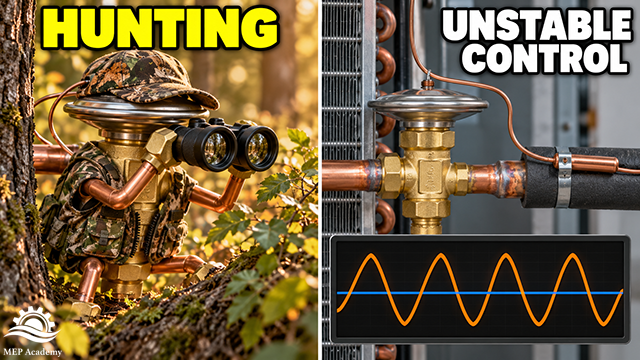
Hunting describes a control that repeatedly overshoots and corrects instead of settling into stable operation.
An expansion valve that hunts can cause refrigerant feed and superheat to fluctuate. Dampers and other controlled devices can also hunt.
13. What Is a Starving Evaporator?
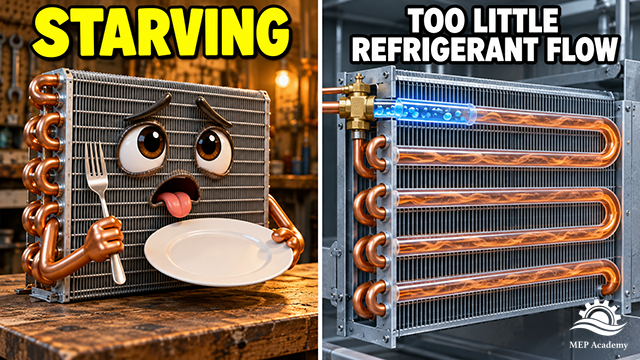
A starving evaporator receives too little refrigerant for its operating conditions. The refrigerant finishes evaporating early, leaving more of the coil handling superheated vapor.
High superheat is a common indicator. Possible causes include insufficient charge, a restriction, or a metering-device problem—not automatically a need to add refrigerant.
14. What Is Compressor Slugging?
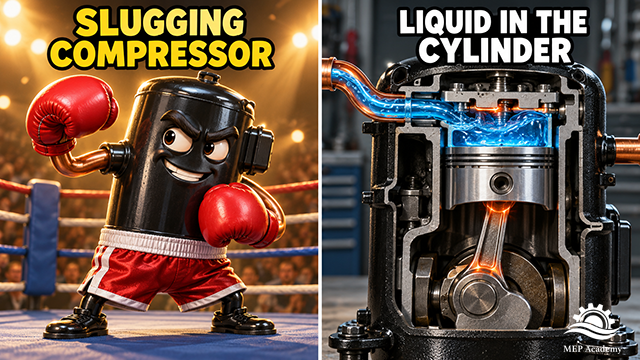
Compressor slugging occurs when liquid enters the compression mechanism.
Compressors are designed to compress vapor. Because liquid does not compress like vapor, slugging can produce damaging mechanical forces. It is related to liquid floodback, but the terms describe different conditions.
15. What Does Pulling a Vacuum Mean?
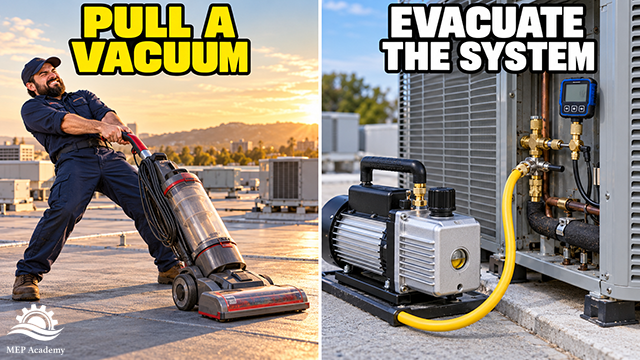
Pulling a vacuum means using a vacuum pump to evacuate a refrigerant circuit before charging or returning it to service.
Evacuation removes air and helps remove moisture. A micron gauge measures the vacuum; reaching a low reading alone does not establish that the system is dry and leak-free.
16. What Is a Refrigerant Sniffer?
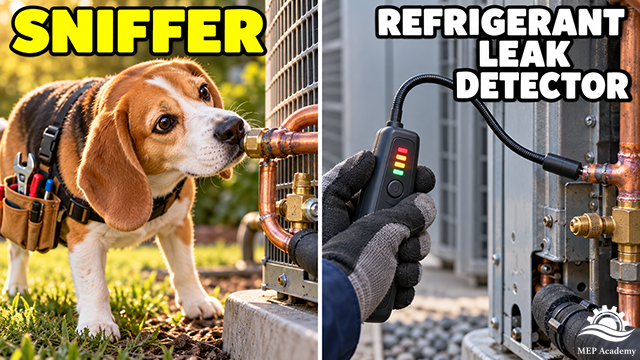
A sniffer is a nickname for an electronic refrigerant leak detector.
Technicians move its sensing tip around fittings, valves, coils, and other potential leak locations. The detector must be suitable for the refrigerant being checked.
17. Why Is an HVAC Coil Sweating?
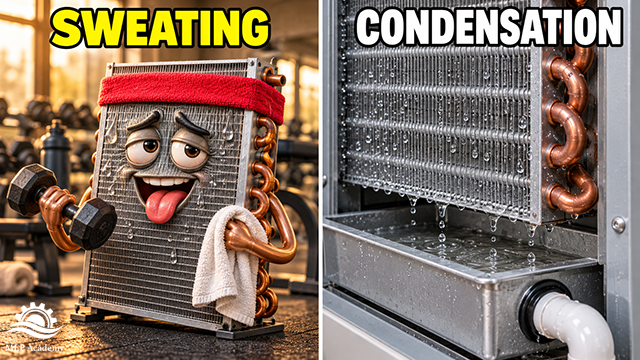
A coil is sweating when water vapor from the surrounding air condenses on its cold surface.
Condensation forms when that surface is below the air’s dew point. On cooling coils, a drain pan and condensate piping collect and remove the water. Sweating does not, by itself, indicate a refrigerant leak.
18. What Is Short Cycling?
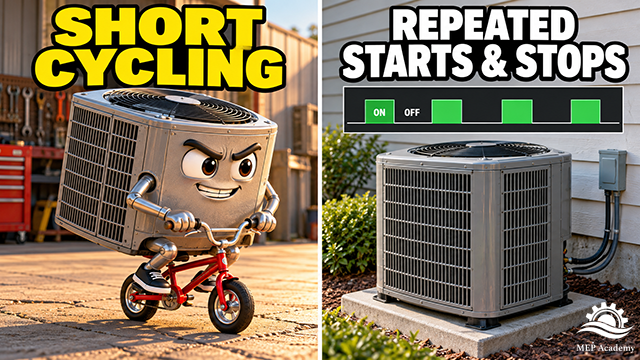
Short cycling means HVAC equipment repeatedly starts and stops with excessively short operating periods.
It can reduce efficiency, impair humidity control, and increase wear. Causes may include oversized equipment, control faults, or safety devices interrupting operation.
19. What Does “Let the Smoke Out” Mean?
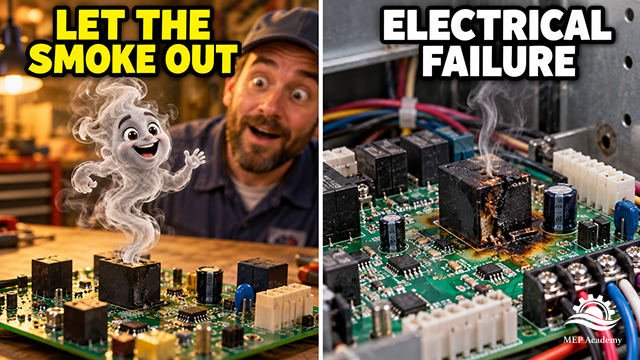
“Let the smoke out” is technician humor for an electrical component that has failed and released smoke.
A motor, transformer, relay, or control board may be involved. Replacing the damaged component does not necessarily resolve the underlying cause of the failure.
20. What Is Free Cooling?
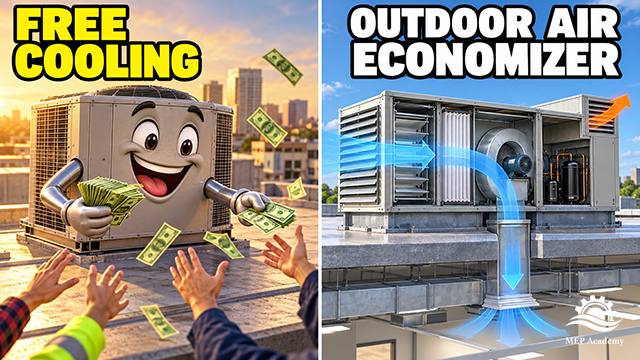
Free cooling uses favorable outdoor conditions to reduce the need for compressor cooling.
An airside economizer brings in suitable outdoor air to help cool the building. Other systems use waterside economizers. Fans, pumps, and controls still consume energy, so “free” does not mean zero operating cost.
21. What Does “The Thermostat Is Calling” Mean?
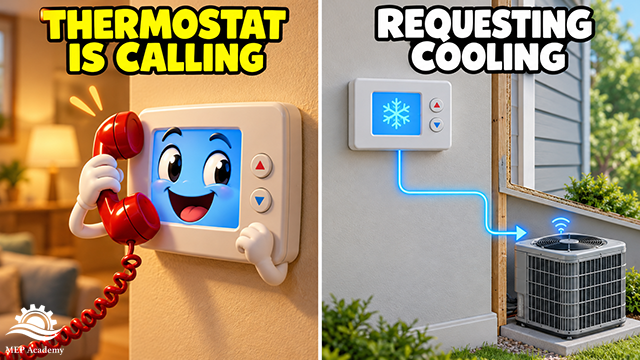
A thermostat calling for cooling is requesting cooling operation. Calling for heat means it is requesting heating.
The request may travel through conventional control wiring or a communicating control system. A call does not guarantee that the equipment is operating; other controls or safeties can prevent startup.
22. What Does a Five-Ton AC Unit Mean?
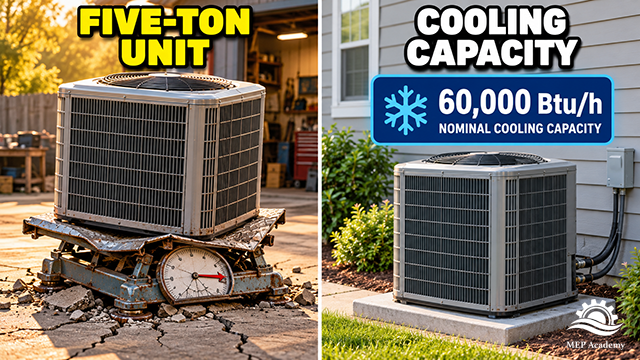
A five-ton AC unit has a nominal cooling capacity of 60,000 Btu per hour. The term describes cooling capacity, not equipment weight.
One refrigeration ton equals 12,000 Btu per hour. Actual equipment capacity varies with operating conditions and the installed system.
23. What Is Ghost Flow?
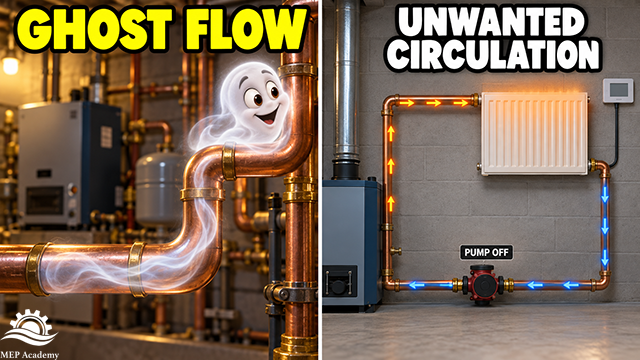
Ghost flow is unwanted water circulation through a heating circuit that should be inactive.
It can result from buoyancy-driven circulation or pressure differences created by other operating pumps. A radiator warming when its zone is not calling for heat can be a clue.
24. What Is Water Hammer?
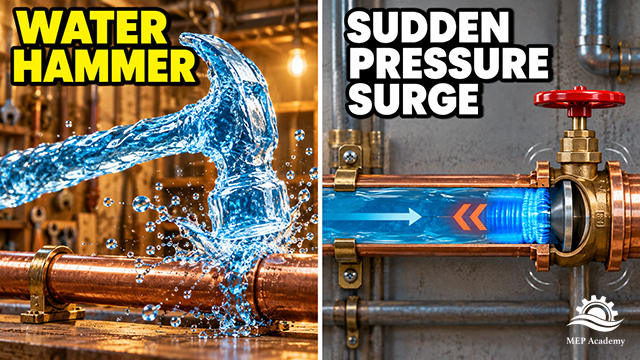
Water hammer is a pressure surge caused by a rapid change in water velocity, such as a valve closing quickly.
The pressure wave can create banging, pipe movement, and damage. Banging in steam systems can involve moving condensate and requires a different investigation.
Learn More HVAC Terms and Skills
Understanding HVAC terminology makes it easier to follow service discussions, read equipment information, and communicate on the job. These definitions provide a starting point; diagnosing a system requires measurements and an understanding of how its components work together.
Watch for our next HVAC slang video, where we explain bleeding radiators, breaking vacuums, unloading compressors, and high head pressure.
Ready to build your knowledge? Explore MEP Academy’s courses, estimating resources, spreadsheets, and forms.
Which HVAC expression confused you when you first heard it? Leave it in the comments.

